Launch offer — valid today only

📄 Digital book in PDF · read it on your phone or print it

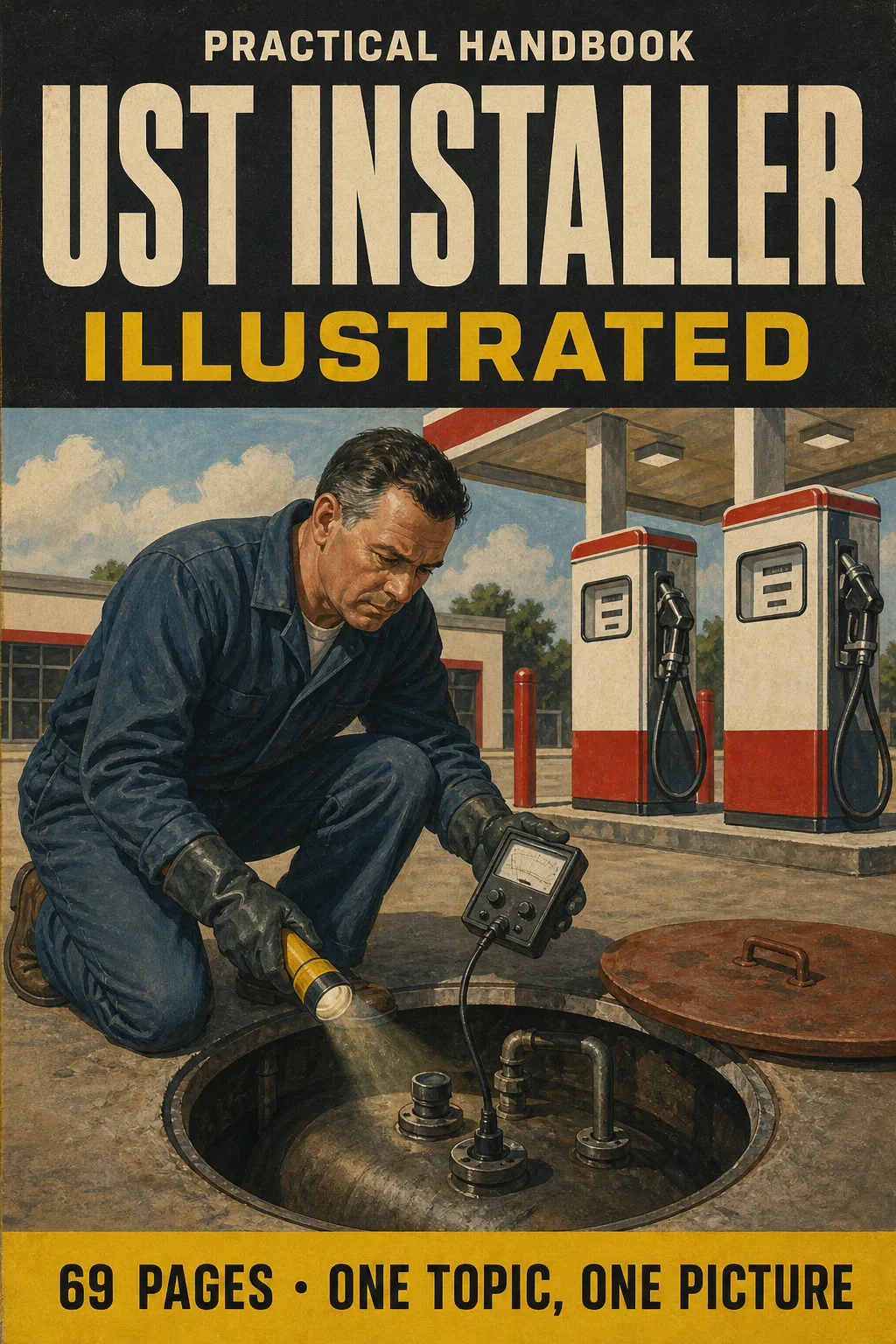
UST Installer Exam in Drawings: Look at Any Line and Know What It Needs One Topic on Every Page

For the ICC UST installation/retrofit and decommissioning exams and state installer programs. Tank types, backfill, hold-downs, piping, sumps, spill buckets, release detection, cathodic protection and closure: each topic on its own page, the drawing first, then what you need to remember. 69 illustrated pages.

GET THE 69 ILLUSTRATED PAGES

🔒 Secure checkout · PDF by email · 30-day guarantee

Every topic, its own pageEach rule drawn, with the explanation right beside it
69 illustrated pages9 parts, from the whole system at a glance to the exam review
Up-to-date sourcesEPA 40 CFR 280, PEI RP100 and NFPA 30/30A
PDF by emailFormat

Look Inside the Book

Every page has one big drawing and a box with the code numbers and steps you need to know:

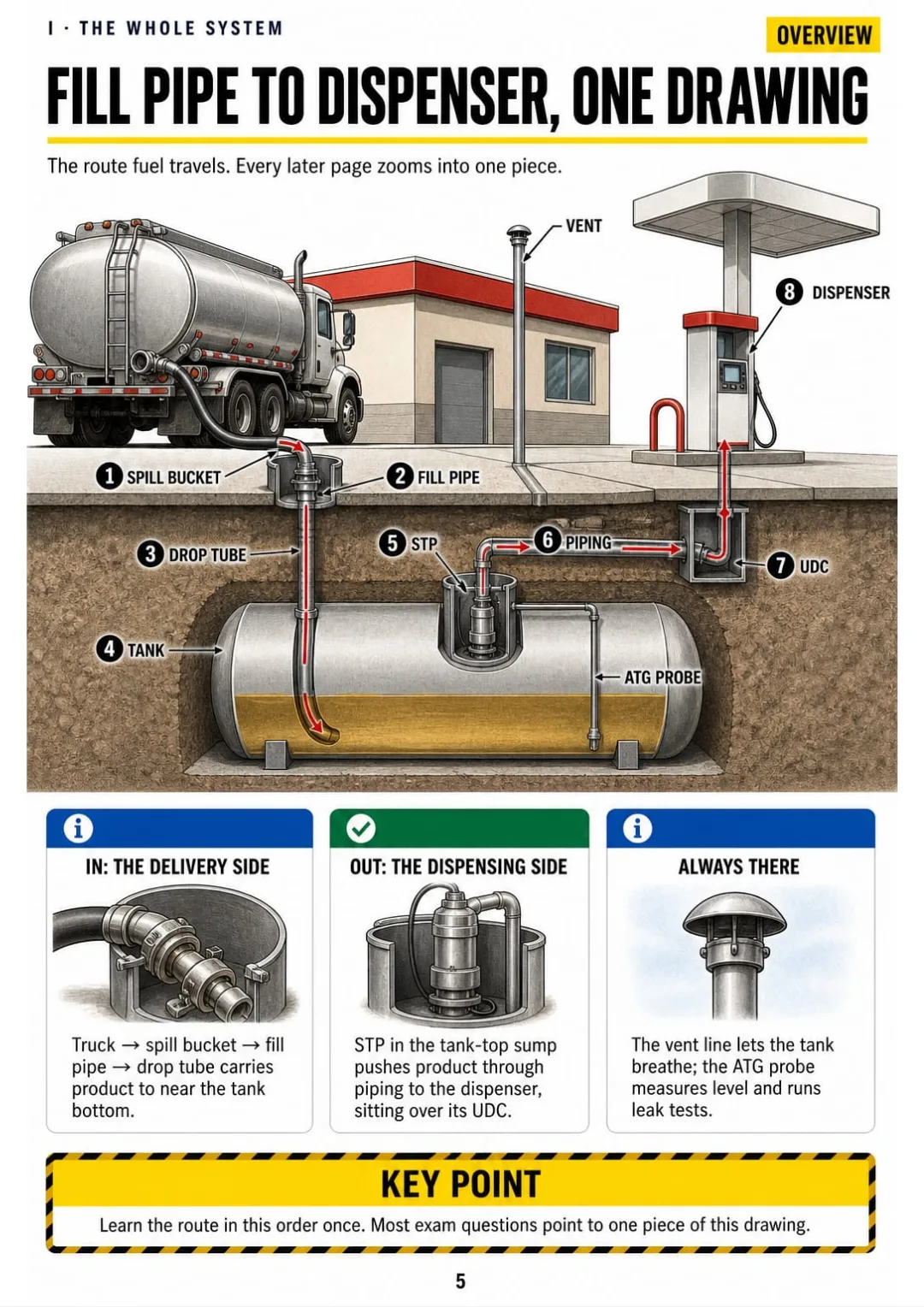
Spill bucket, fill pipe, drop tube, tank, STP, piping, UDC, dispenser: one numbered route.
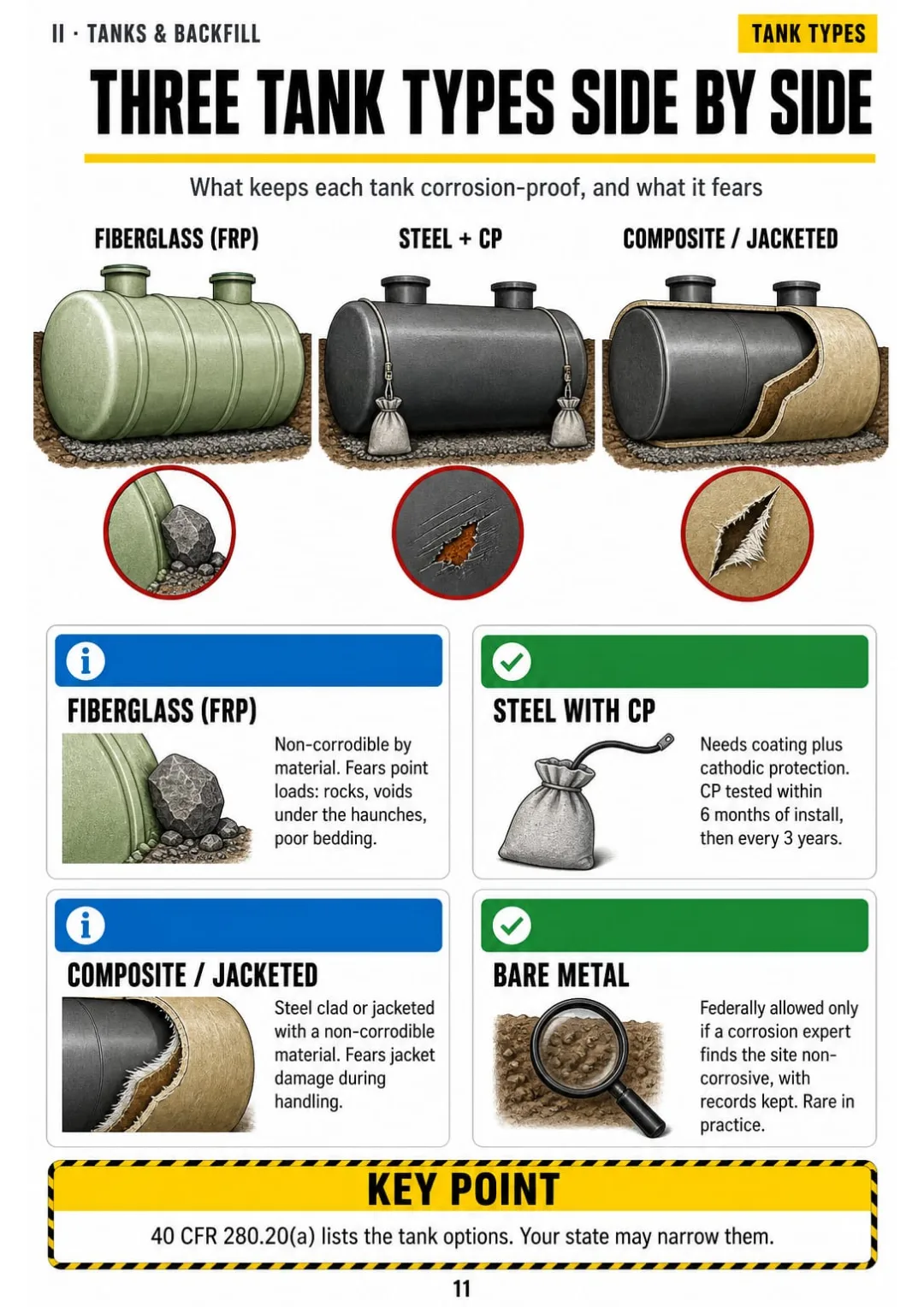
FRP, steel with cathodic protection, composite: the main federal tank options of 40 CFR 280.20(a).
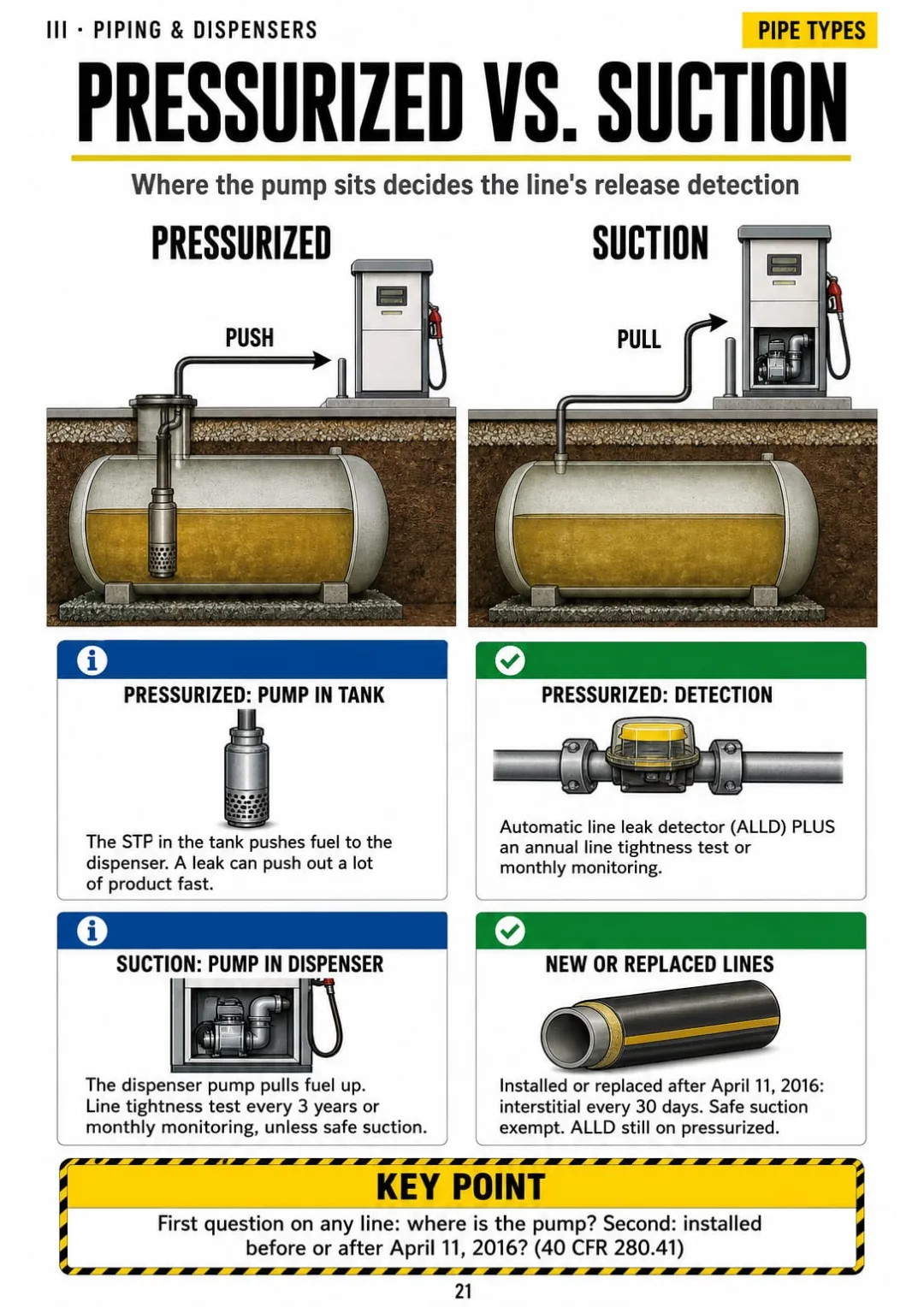
Pressurized = ALLD + annual tightness test or monthly monitoring (40 CFR 280.41(b))
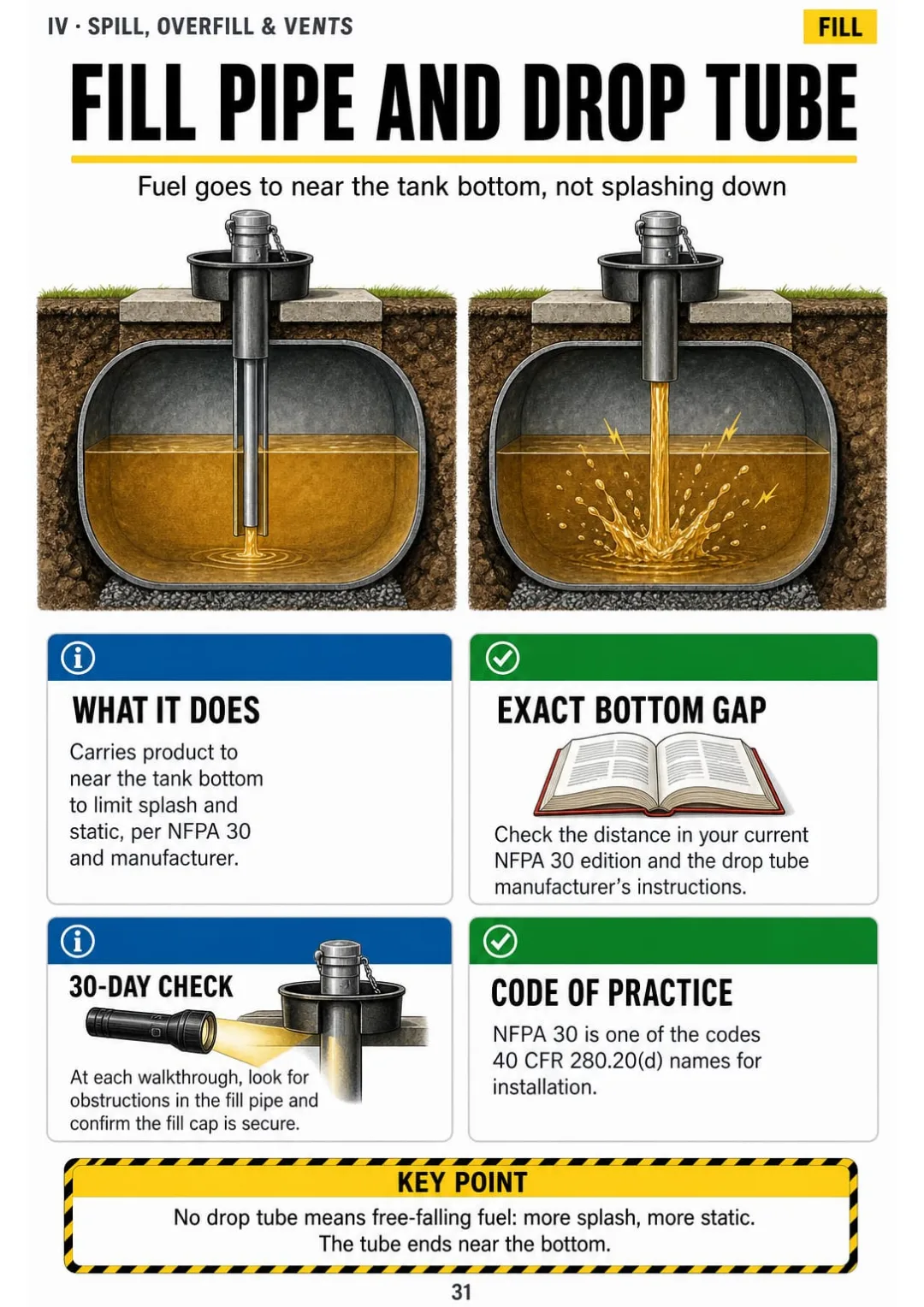
Drop tube: fuel delivered near the bottom to limit splash and static (NFPA 30)
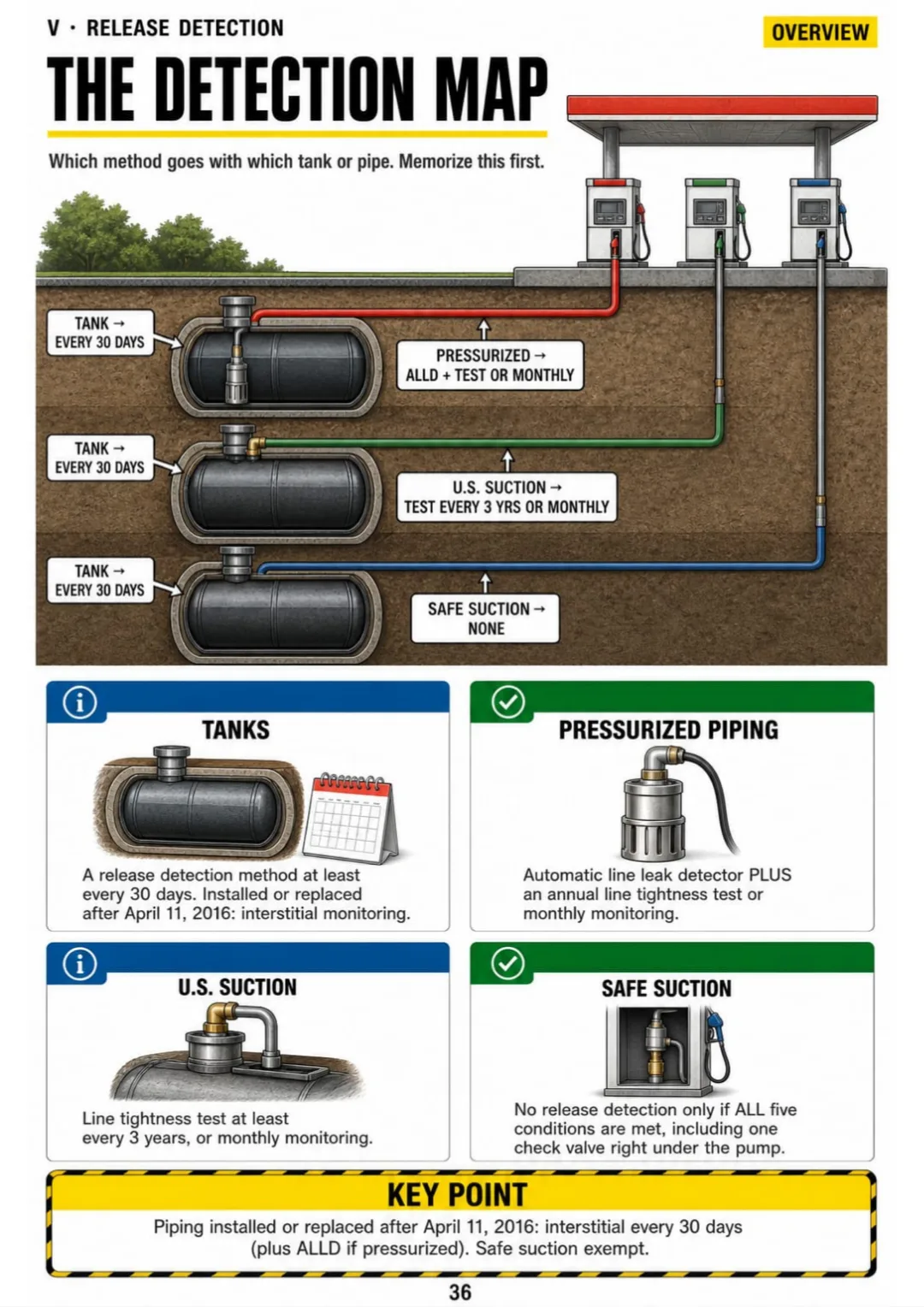
Tanks every 30 days · pressurized: ALLD + annual test or monthly · U.S. suction: test every 3 years or monthly · safe suction: none
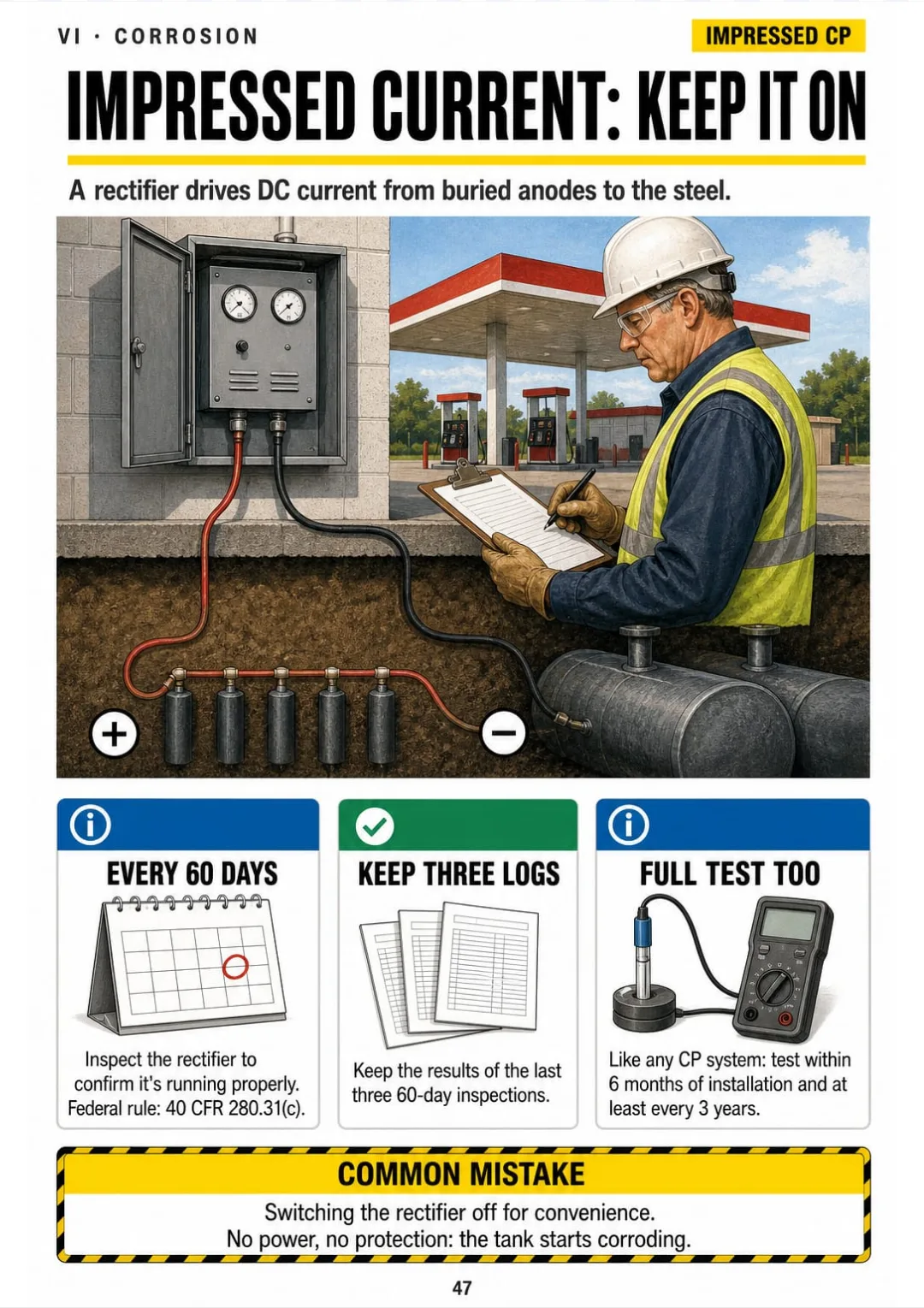
Impressed current: inspect the rectifier every 60 days and keep the last three logs.
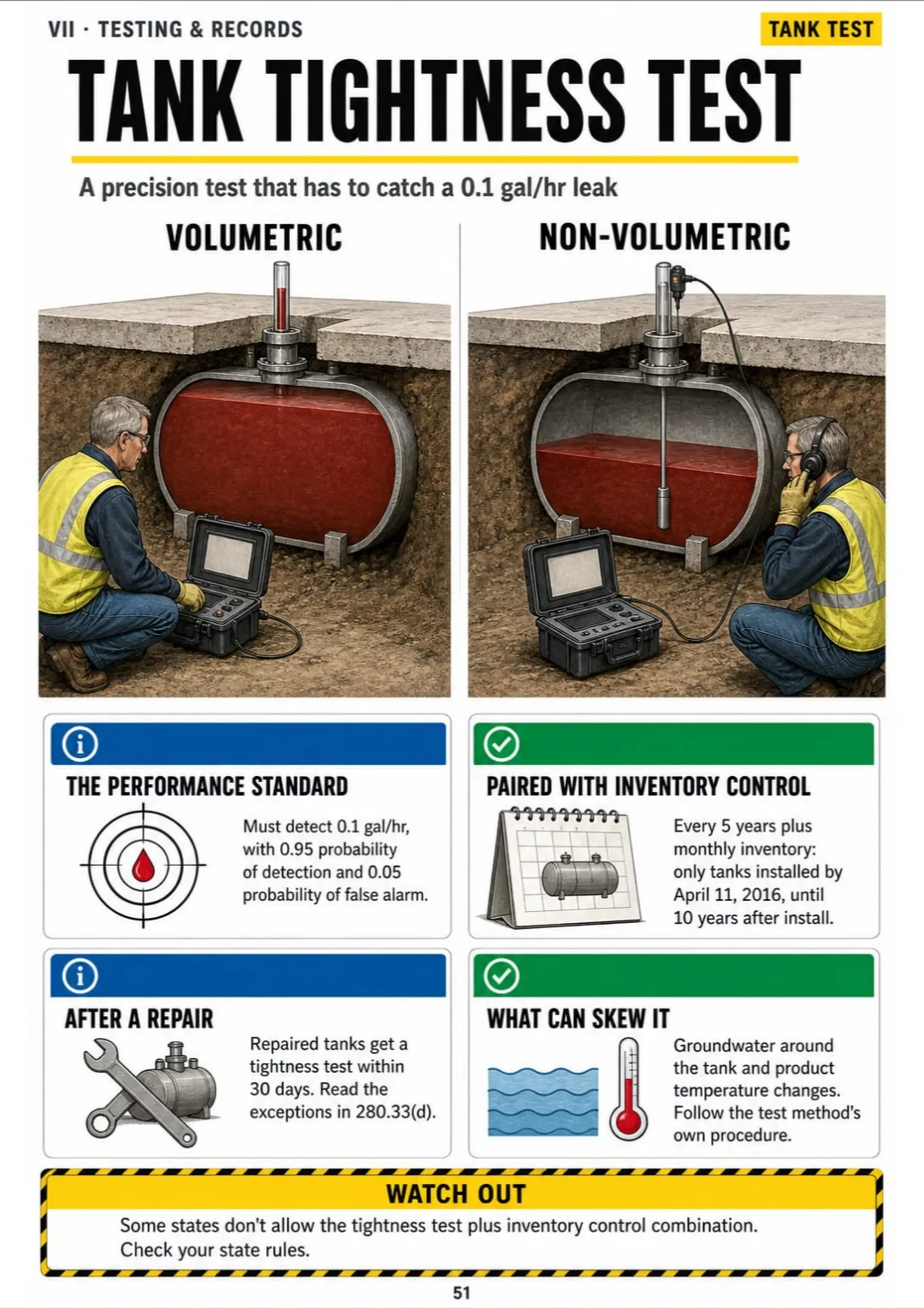
Tank tightness test: 0.1 gal/hr, Pd 0.95, Pfa 0.05 — and within 30 days of a repair.
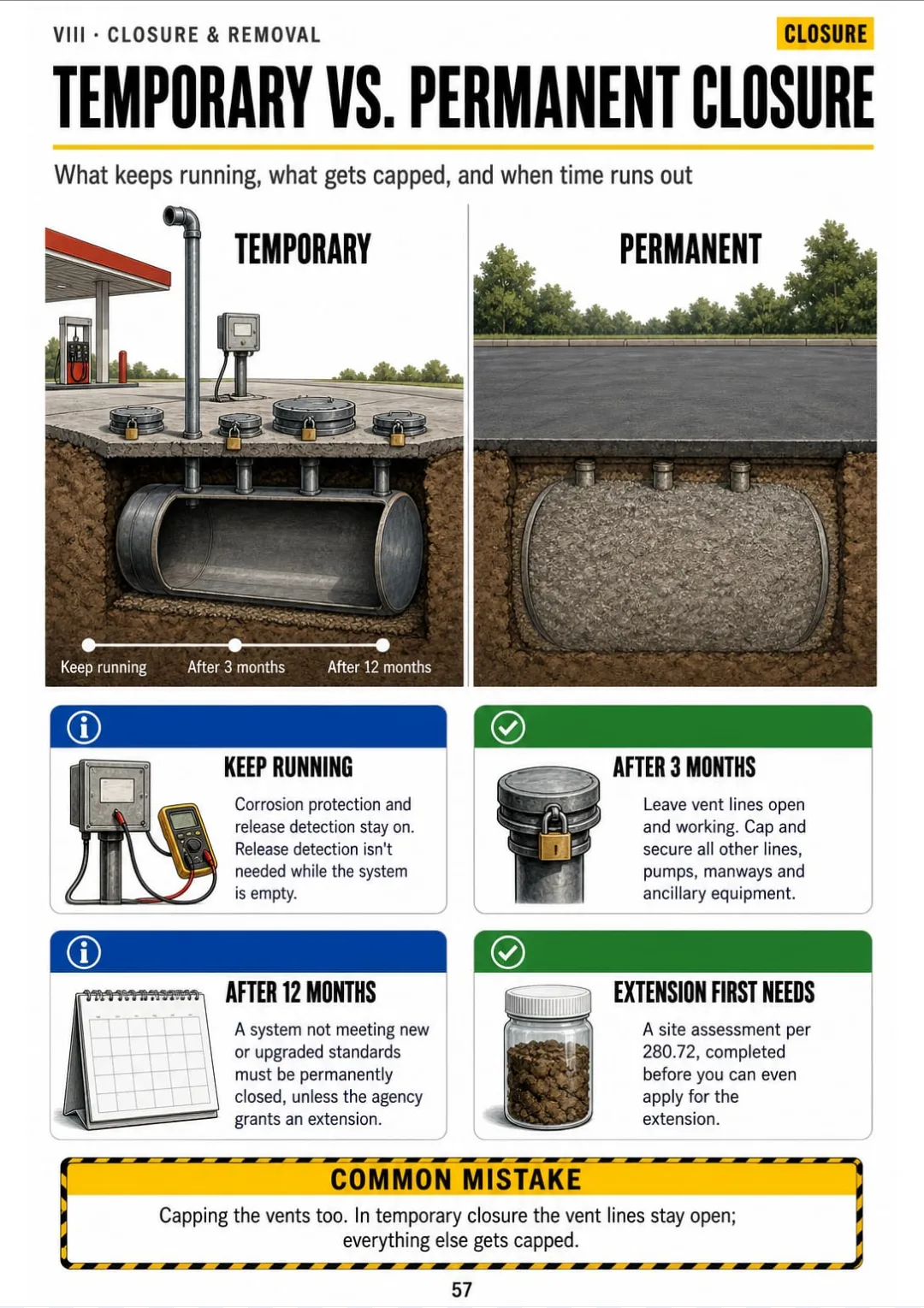
Temporary closure: CP and detection stay on; at 3 months cap all but vents; substandard systems close after 12 (40 CFR 280.70)

Swipe to see more →

These are real pages from the book. The table of contents is the full one: 9 parts and 65 topics.

The Problem Isn't You. It's How It Was Explained to You.

You're at the tank pad, looking at a line running from the tank to the dispenser, and the exam question is simple: what release detection does this piping need?

You've been through 40 CFR 280.41 more than once. But it's subsections and exceptions, pressurized and suction in the same block of text, and nothing tells you which line is which just by looking at it.

Pressurized = ALLD + annual tightness test or monthly monitoring (40 CFR 280.41(b))

In the book it's one page. The pressurized line on one side, the suction line on the other, pump and check valve drawn where they sit. Pressurized: ALLD plus an annual tightness test or monthly monitoring. U.S. suction: a test every three years or a monthly method. Safe suction: none.

Same with the rest: the spill bucket, the detection map, the corrosion cell, the tank tightness test, temporary closure. Each one gets its own page.

You look at the pipe, you know what goes with it, and you answer without digging back through the code.

COMPARE FOR YOURSELF

Same Topic, Two Ways to Study It

THIS
  • The manual: line after line of code
  • Tank types explained in words only
  • You walk into the exam with doubts
Pursuant to 40 CFR 280.20(a), each tank shall be properly designed and constructed, and any portion underground that routinely contains product shall be protected from corrosion in accordance with a code of practice developed by a nationally recognized association or independent testing laboratory. Acceptable configurations include tanks constructed of fiberglass-reinforced plastic; tanks constructed of steel that are cathodically protected by means of a suitable dielectric coating, field-installed or factory-installed cathodic protection and electrical isolation; and tanks constructed of a steel-fiberglass-reinforced-plastic composite, among other options determined by the implementing agency.
FOR THIS
  • Each tank type in one drawing
  • The code references in a box
  • You see it and you get it
FRP, steel with cathodic protection, composite: the main federal tank options of 40 CFR 280.20(a).
CONTENTS

Take a Look at the 9 Parts and 65 Topics

The whole system at a glance, tanks and backfill, piping and sumps, spill and overfill, release detection, cathodic protection, testing and records, closure, and an exam review: 69 pages, all illustrated.

IThe Whole System at a Glance · pp. 5-10
  1. One Drawing, Fill Pipe to Dispenser
  2. What Counts as a UST (and What Doesn't)
  3. Who Writes the Rules You'll Be Tested On
  4. The 2015 Rule: What Changed for Installers
  5. Installation Certification: The Six Methods
  6. Words the Exam Uses, Drawn
IITanks, Excavation & Backfill · pp. 11-20
  1. Three Tank Types Side by Side
  2. Single Wall vs. Double Wall
  3. Receiving and Checking the Tank on Site
  4. Digging Safely: The Excavation Page
  5. Sizing the Hole: Clearances
  6. Backfill: Only What the Tank Manufacturer Allows
  7. Placing Backfill in Lifts
  8. Water Table vs. Empty Tank: Why Tanks Float
  9. Hold-Downs: Deadmen or Slab
  10. Cover and Traffic Loads
IIIPiping, Sumps & Dispensers · pp. 21-29
  1. Pressurized vs. Suction: Spot the Difference
  2. Safe Suction vs. U.S. Suction
  3. Rigid vs. Flexible Piping
  4. The Piping Trench
  5. Flex Connectors and Entry Boots
  6. The Tank-Top (STP) Sump
  7. Under-Dispenser Containment (UDC)
  8. Shear Valve: Anchored and Level
  9. Transition and Product Compatibility
IVSpill, Overfill & Venting · pp. 30-35
  1. The Spill Bucket
  2. Fill Pipe and Drop Tube
  3. Overfill: Three Devices, Three Trip Points
  4. Vent Lines
  5. Stage I Vapor Recovery
  6. Tank-Top Fittings Map
VRelease Detection · pp. 36-44
  1. The Detection Map: What Goes With What
  2. Interstitial Monitoring
  3. Automatic Tank Gauging (ATG)
  4. SIR, Vapor and Groundwater Monitoring
  5. Manual Tank Gauging and Inventory Control
  6. Automatic Line Leak Detector (ALLD)
  7. Line Tightness Test
  8. 30-Day Walkthrough and Annual Checks
  9. Suspected Release: The First 24 Hours
VICorrosion & Cathodic Protection · pp. 45-50
  1. Why Buried Steel Corrodes
  2. Galvanic (Sacrificial) Anodes
  3. Impressed Current Systems
  4. Electrical Isolation
  5. The -850 mV Test
  6. Internal Lining
VIITesting, Repairs & Records · pp. 51-56
  1. Tank Tightness Test
  2. Testing Spill Buckets and Sumps
  3. Repairs Done by the Rule
  4. Retrofitting an Existing Site
  5. How Long to Keep Each Record
  6. Operator Training: A, B, C
VIIIClosure & Removal · pp. 57-64
  1. Temporary vs. Permanent Closure
  2. Notify First: The 30-Day Rule
  3. The Closure Order
  4. Emptying: What 'Empty' Means
  5. Inerting and Purging
  6. Cleaning and Confined Space
  7. Pulling the Tank or Closing in Place
  8. Site Assessment and Sampling
IXExam Review · pp. 65-69
  1. The Numbers Page
  2. Pipe Type → Detection Method
  3. Installation Day Checklist
  4. Closure Day Checklist
  5. How to Use Your Code Book in the Exam

One Page, One Topic, All Clear

Think of it this way:

You're at the pit with an empty fiberglass tank, and groundwater is sitting a few feet down. You need to know what keeps that tank in the hole.

You open the page on why tanks float and you see the water line drawn against the empty tank, with the deadmen or the slab and the straps holding it down.

Tanks every 30 days · pressurized: ALLD + annual test or monthly · U.S. suction: test every 3 years or monthly · safe suction: none

Same with pressurized vs. suction, the spill bucket, the detection map, the -850 mV test and the closure order: each one on its own page.

UST Installer Illustrated is 9 parts and 69 illustrated pages, one topic on each, and it ends with an exam review: the numbers page, pipe type to detection method, and the installation and closure day checklists.

What you see drawn, you don't have to memorize.

What's Inside UST Installer Illustrated:

Ipp. 5-10

The Whole System at a Glance

The whole system in one drawing, what counts as a UST, who writes the rules, the 2015 changes, the four ways to get certified and the exam words drawn.

IIpp. 11-20

Tanks, Excavation & Backfill

The three tank types, single vs. double wall, receiving the tank, safe excavation, clearances, backfill and lifts, why tanks float, hold-downs and traffic loads.

IIIpp. 21-29

Piping, Sumps & Dispensers

Pressurized vs. suction, safe vs. U.S. suction, rigid vs. flex piping, the trench, connectors and boots, STP sump, UDC, shear valve and product compatibility.

IVpp. 30-35

Spill, Overfill & Venting

The spill bucket, fill pipe and drop tube, the three overfill devices and their trip points, vent lines, Stage I vapor recovery and the tank-top fittings map.

Vpp. 36-44

Release Detection

Know which detection each tank and line needs: the detection map, interstitial monitoring, ATG, SIR, vapor and groundwater, manual gauging, the ALLD, line tightness, the 30-day and annual checks, and what to do with a suspected release.

VIpp. 45-50

Corrosion & Cathodic Protection

Why buried steel corrodes, galvanic anodes, impressed current, electrical isolation, the -850 mV test and internal lining.

VIIpp. 51-56

Testing, Repairs & Records

Tank tightness, spill bucket and sump testing, repairs by the rule, retrofitting an existing site, how long to keep each record and operator training A, B, C.

VIIIpp. 57-64

Closure & Removal

Close a tank in the right order: temporary vs. permanent closure, the 30-day notice, what empty means, inerting and purging, cleaning, pulling or closing in place, and sampling.

IXpp. 65-69

Exam Review

The numbers page, pipe type to detection method, the installation and closure day checklists, and how to use your code book in the exam.

At the end of the book: Exam review with the numbers page, a pipe-to-detection table, and installation and closure day checklists.
Plus: 2 Free Books

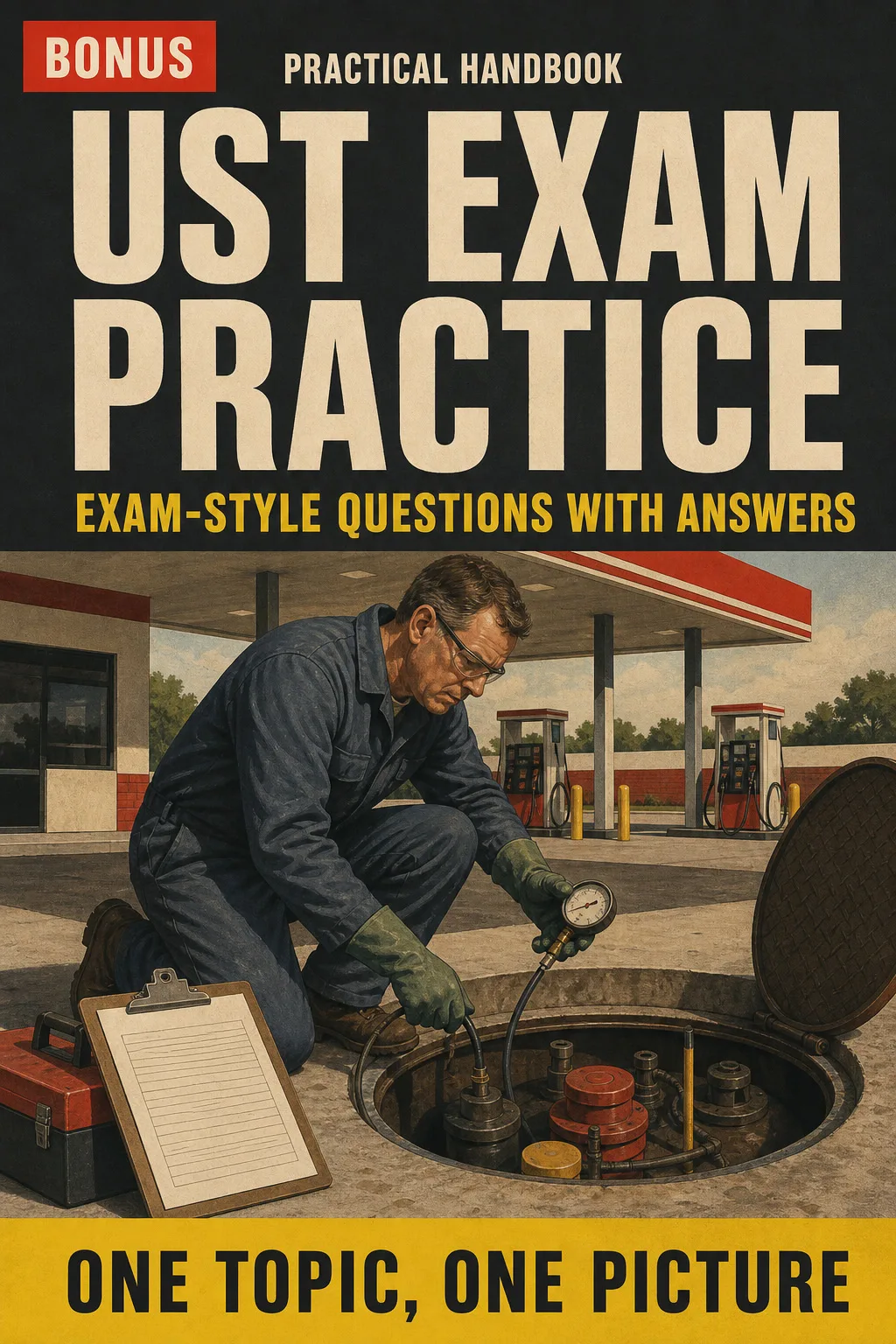
UST Exam Practice: Exam-Style Questions with Answers

BONUS 1: «UST Exam Practice: Exam-Style Questions with Answers»

Value on its own: US$ 17.90

Test yourself topic by topic with exam-style questions, each answer explained and pointed back to the page that covers it.

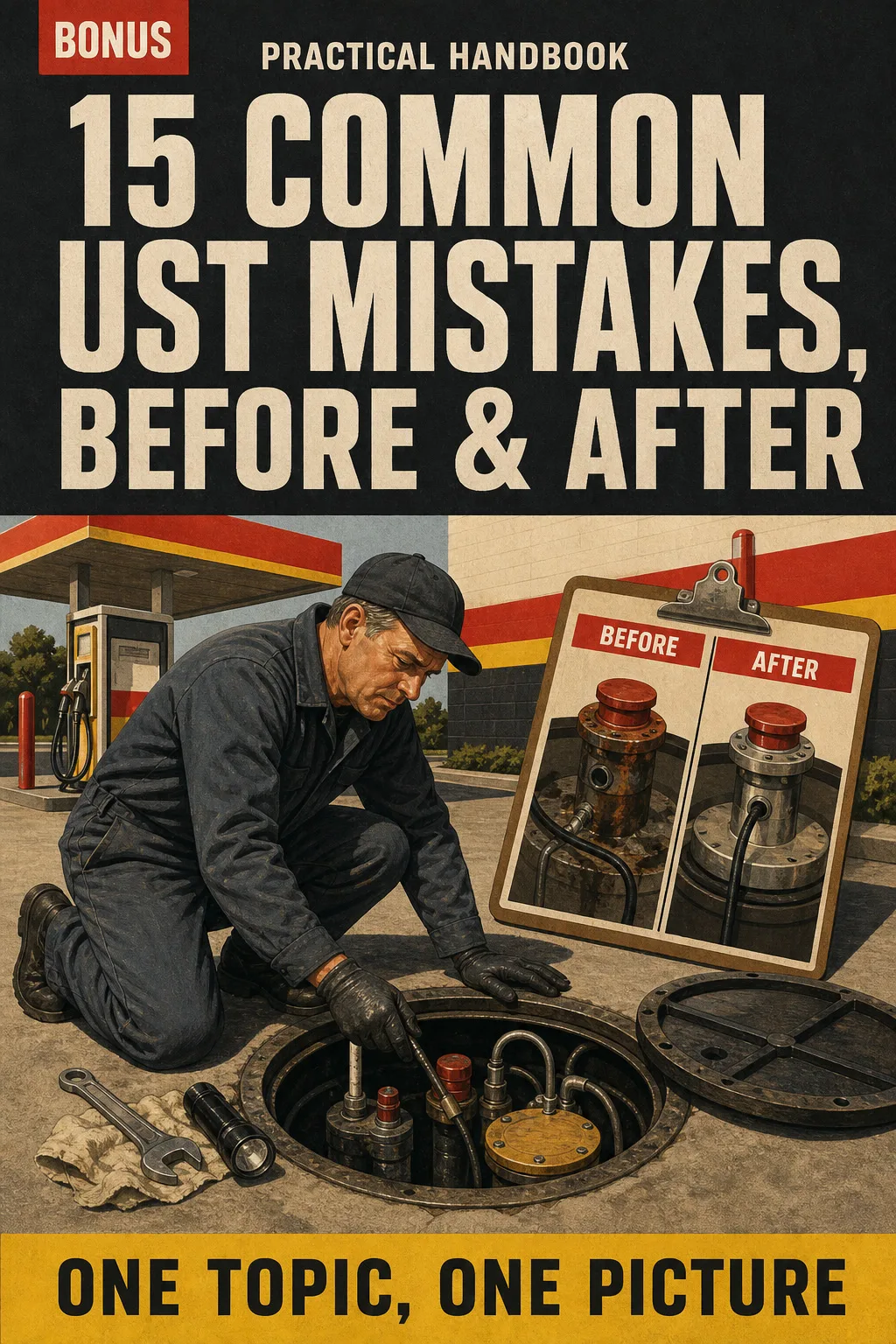
15 Common UST Mistakes, Before & After

BONUS 2: «15 Common UST Mistakes, Before & After»

Value on its own: US$ 14.90

The most frequent field mistakes, from loose backfill to dry sumps to skipped inerting, each drawn wrong and right on a single page.

UST Installer Illustrated with 2 Free Books

  • UST Installer Illustrated: 69 illustrated pagesUS$ 63
  • BONUS 1: UST Exam Practice: Exam-Style Questions with AnswersUS$ 17.90
  • BONUS 2: 15 Common UST Mistakes, Before & AfterUS$ 14.90
  • High-resolution PDF to printIncluded
Total value US$ 95.80
YOUR PRICE:
US$ 27
You save US$ 68.80
YES, I WANT UST INSTALLER ILLUSTRATED FOR US$ 27

📄 This is a digital PDF book sent to your email: nothing is printed or shipped.

Secure purchaseEncrypted payment30-day guarantee

PDF by email: We email you UST Installer Illustrated as a PDF, together with the two free books. It's a single payment: no installments, no extra charges.

Who This Book Is For

You're studying for the installer exam

You're studying for the installer exam

You see the whole system first, then one topic a night, always in the same order, with the code reference right on the page.

Your exam date is close

Your exam date is close

The exam review pulls the numbers, the pipe-to-detection table and the closure order onto a few pages you can go over the night before.

You already work fuel sites

You already work fuel sites

You get the reason behind what you do every day, drawn clearly enough to show your crew why a sump stays dry or a tank gets anchored.

Everything You Get Today

US$ 95.80US$ 27
YES, I WANT UST INSTALLER ILLUSTRATED FOR US$ 27

📄 This is a digital PDF book sent to your email: nothing is printed or shipped.

30DAYS
GUARANTEE

30-Day Guarantee

Try UST Installer Illustrated for 30 days, bonus books included.

We refund everything if the file won't open, if the book isn't what you see here, if you were charged twice or if the email doesn't arrive. Just email us.

You pay once. No subscriptions.

Frequently Asked Questions

Is it for me if I've been doing this work for years?

Yes. It's not a beginner's book. It puts the rules behind the work you already know into drawings, in the order the exam asks about them.

Does it cover my state's exam, and is it up to date?

It's built on the federal rule every state program starts from: EPA 40 CFR Part 280 as revised in 2015, plus PEI RP100, API RP 1604 and RP 1615, NFPA 30 and 30A, and OSHA 29 CFR 1926 Subpart P. Where states can be stricter (detection, records, notice periods), the page says so, so you check that one point in your state program and in the code edition your exam uses.

Is it official? Do I get a certificate?

No. It's an independent study guide, not published or endorsed by ICC, the EPA or any state agency. It covers the topics of UST installation, retrofit and closure exams built on 40 CFR 280. Check your state's exam outline for anything it adds.

Does it replace my training course?

No. It doesn't replace your course, your code book or your company's safety training. It helps you see and review what you study there.

Are the practice questions the ones on the exam?

No. They're exam-style questions written for this book, each one with its answer explained and the page that covers it.

When and how do I get it?

The book and the 2 bonus books come as PDFs by email, sent to the address you enter when you pay.

Do I have to pay every month?

No. You pay once. No subscription.

Can I have it on paper?

We don't ship a printed book: it's a PDF. It prints fine at home or at a print shop, so you can keep a copy in the truck.

How does the refund work?

You have 30 days. We refund everything if the file won't open, if the book isn't what you see on this page, if you were charged twice or if the email doesn't arrive: just email us.

Before You Close This Page

No more rereading the code with nothing sticking.

Pressurized or suction, you see it drawn and you know.

You walk into the exam knowing where everything is.

Drawings make studying faster.

The book is right below.

One-time payment: US$ 27 · Guarantee: 30 days · PDF by email

YES, I WANT UST INSTALLER ILLUSTRATED FOR US$ 27

📄 This is a digital PDF book sent to your email: nothing is printed or shipped.